Color Mixes
What does red and blue make? What actually produces brown? Each page below mixes two named colors at 50/50 and shows the real result — the hex code, the values in between, and how the mix reads against black and white. No guessing from paint you do not have.
Purples & pinks
Red and blue in every proportion — the family that produces purple, violet and pink.
Greens & teals
Yellow and blue mixes, from lime through green to deep teal.
Oranges & browns
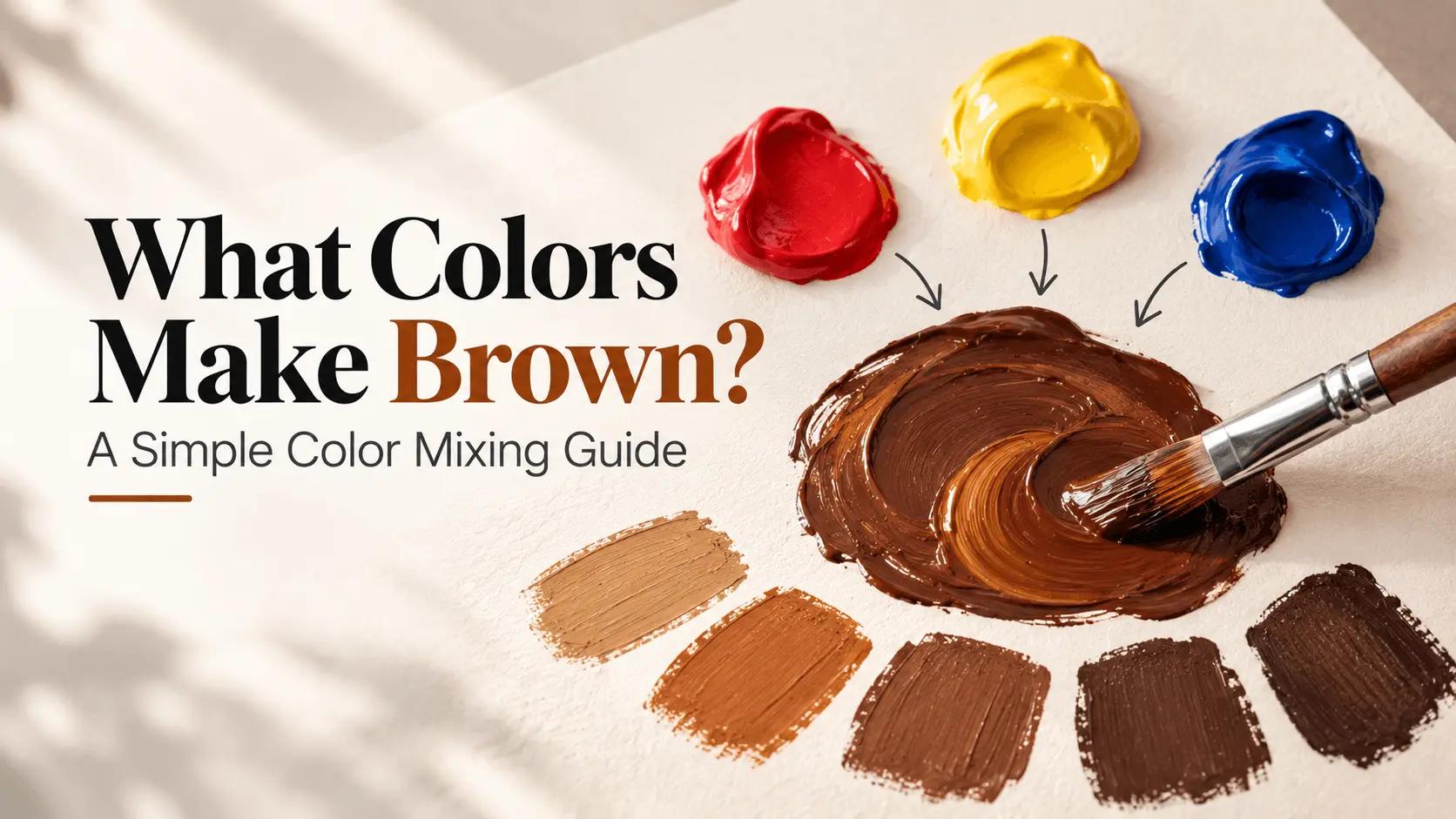
Warm mixes, including the complementary pairs that muddy into brown.
Neutrals & tints
Mixes with black, white and grey — the fastest way to build a neutral or a tint.
Mixing colors is predictive once you know the wheel. Two primaries next to each other produce the secondary between them (red and yellow make orange); two colors opposite each other cancel out and produce brown or grey; and adding white or black to a color keeps its hue while changing only its lightness. Every page here shows the result of one mix at 50/50, then the 25%, 50% and 75% steps so you can see how the color travels.
Frequently asked questions
Purple — the exact midpoint between them on the wheel, around #800080. Mixing more red gives plum, more blue gives violet.
Good to know
- Every result is calculated with a straight 50/50 blend of the two named colors.
- The 25% and 75% steps show how the mix shifts when you change the ratio.
- Each page links to the color pages behind both source colors.
Mix your own colors
Blend any two colors at any ratio, build a palette around the result, or check how readable the mix is as text.